
Regenerative Design and Sustainable UX
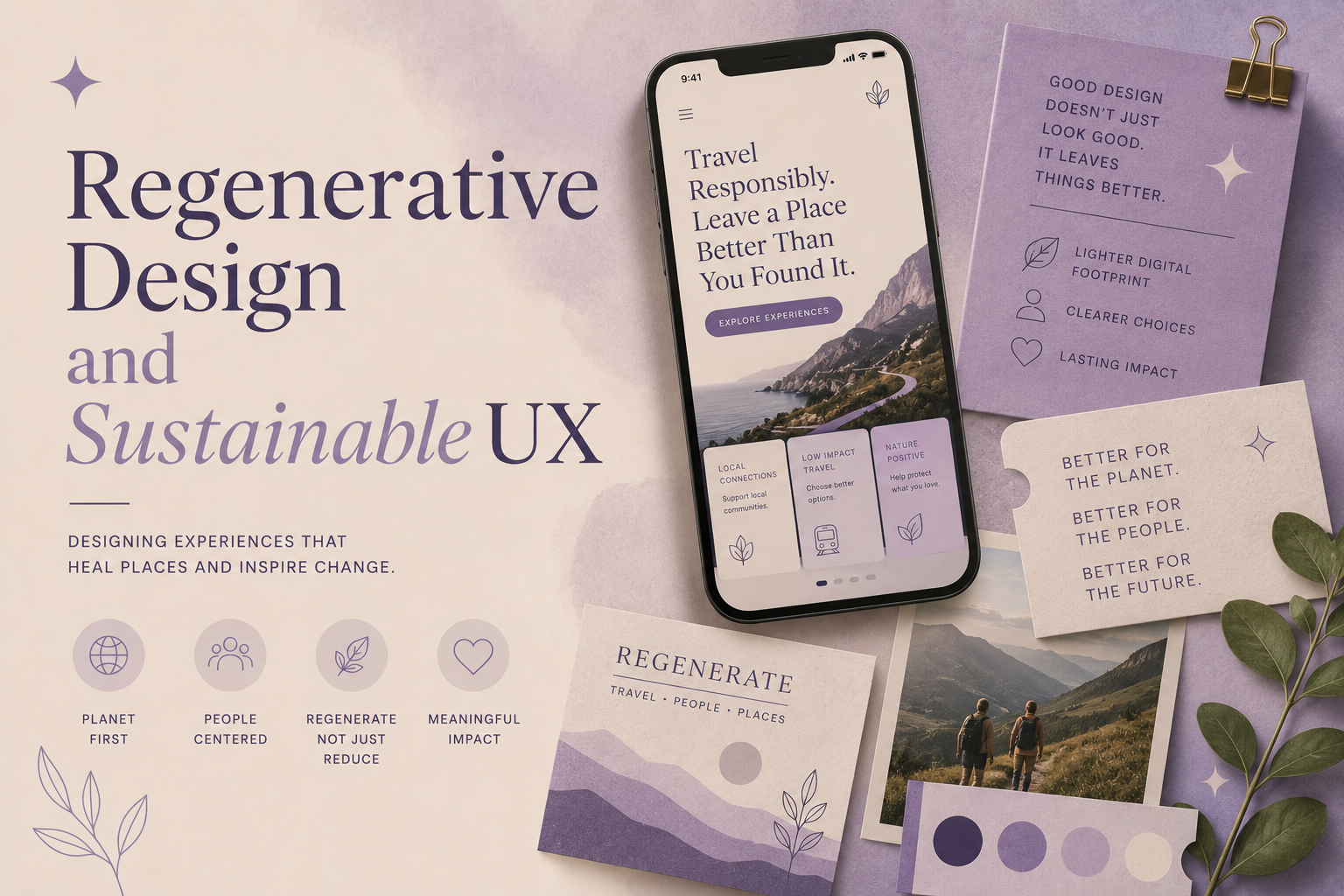
(Image made with AI)
If I am being honest, I used to think sustainable design was just a corporate buzzword. I thought it simply meant slapping a green color palette on a logo, using a generic leaf graphic, and calling it a day. It felt like greenwashing, just another way to sell things to people who already care about the environment. But as we move deeper into 2026, the conversation has shifted entirely from "sustainable" to "regenerative." It is no longer just about doing less harm to the planet. It is about actively healing the spaces we visit.
While studying film, I learned how much influence a director has over an audience's emotions and actions. Graphic designers hold that exact same power over consumer behavior. According to Getty Images VisualGPS, travelers are now prioritizing meaningful and value driven experiences. They want to leave a place better than they found it. As designers, we actually have the power to influence this behavior through the interfaces and campaigns we build. We are the architects of the digital experience, and the choices we make on a screen dictate the choices a traveler makes in the real world.
Designing for Sustainability
UX and Functional Design
Designing for sustainability goes way beyond aesthetics. It is heavily rooted in User Experience and functional graphic design. Here is how we apply core design theory to promote responsible travel. First, we have to look at Digital Sustainability. Graphic design directly impacts a website's carbon footprint. Every single image, animation, and font file requires server energy to load. By designing darker user interfaces for OLED screens and optimizing vector graphics instead of using heavy raster images, we literally save energy every time a page loads. When we strip away unnecessary visual clutter, we decrease the overall page weight. This not only reduces carbon emissions but also drastically improves loading times and user retention.
Intentional Visual Hierarchy
Second, we have to use Intentional Visual Hierarchy. We can use scale, weight, and contrast to guide a user toward environmentally friendly choices. If we want a traveler to book a local train instead of a short flight, we use hierarchy to make the sustainable option the most visually prominent element on the screen. This ties directly into Hick's Law, a UX principle stating that the time it takes to make a decision increases with the number and complexity of choices. By simplifying the layout and elevating the sustainable choice, we remove the cognitive friction.
Aesthetic Usability Effect
Third, we must leverage the Aesthetic Usability Effect alongside accessibility. Users naturally perceive attractive designs as more usable. If we make regenerative tourism look sleek, modern, and highly legible, people will engage with it more. But true regenerative design is also inclusive. By strictly following accessibility guidelines for color contrast and legible typography, we ensure that every user can navigate the platform comfortably. If a platform is not accessible, it is not truly sustainable, because it is actively excluding a portion of the population.
The Future of Responsible Design
I keep thinking about how we shape the way people see the world. If I design a campaign that glorifies overcrowded beaches and flashy consumption, I am contributing to the problem. But if I use visual hierarchy, file optimization, and clear typography to celebrate responsible travel, I am part of the solution. Design is not just a pretty picture. It is a powerful tool for change, and in the tourism industry, it might be the key to saving the destinations we love the most.

Hi! I’m Jaelyn, a New Jersey–based graphic designer and filmmaker creating thoughtful work through motion, branding, and visual storytelling.
Passionate about culture, tourism design, and crafting strategic identities that connect people, place, and purpose.
