
Designing For Belonging
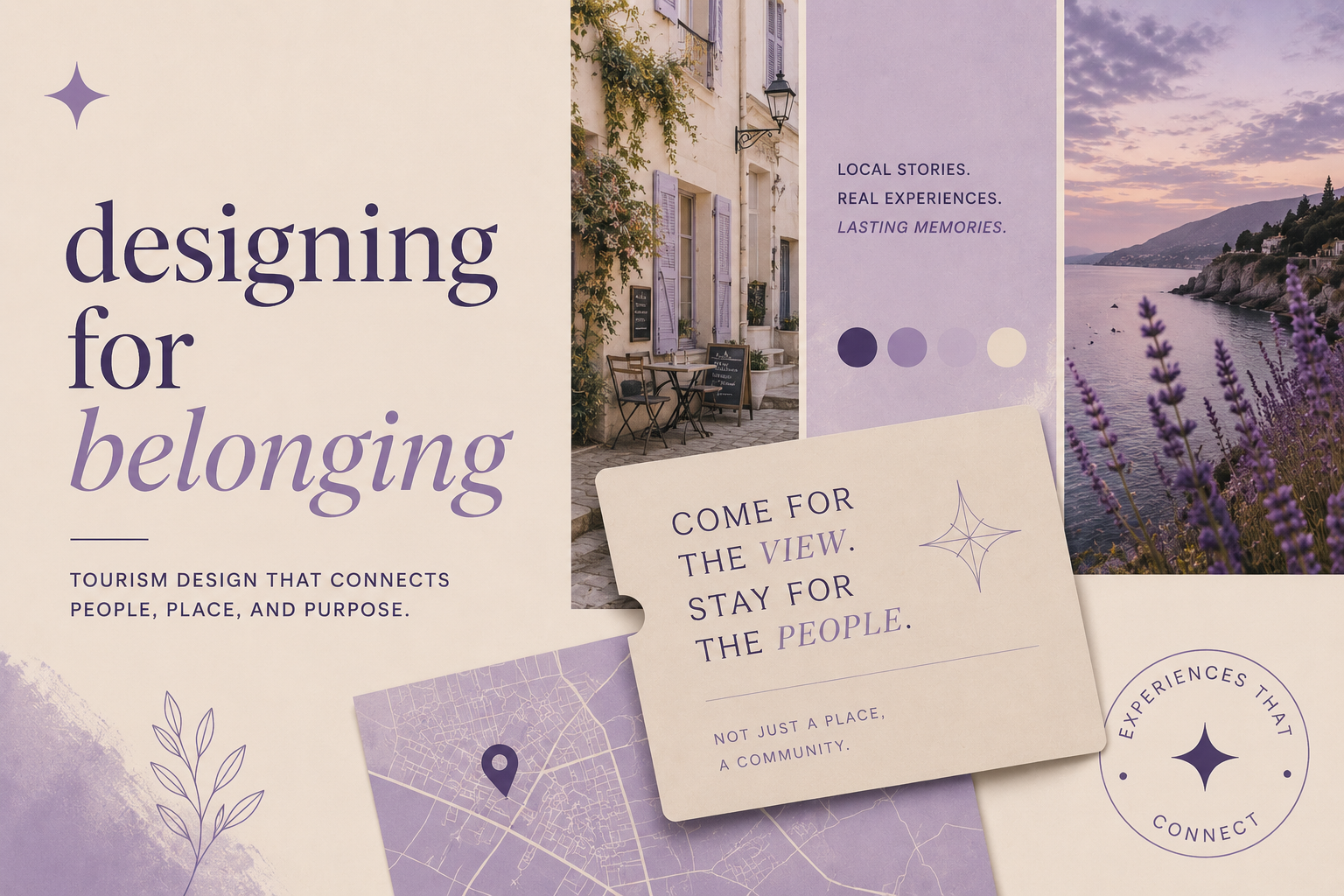
(Image made with AI)
When I first started thinking about tourism design, I kept picturing those glossy travel posters with perfect sunsets and empty beaches. You know the ones. The highly saturated, heavily edited billboards that look beautiful but feel entirely hollow. But the more I learned about what travelers actually want in 2026, the more I realized that kind of design is dead. Nobody wants to feel like a tourist anymore. They want to feel like they belong.
To create that feeling of belonging, designers have to rethink how we use visual language. According to Concept Culture, modern destination marketing is all about human stories and social interaction. We are no longer just selling a landmark. We are designing an experience. This shift completely changes the role of the designer. Instead of acting as a traditional advertiser, we have to act as visual translators, decoding the "vibe" of a place so a visitor can understand it instantly.
Core Principles of Tourism Design
To actually achieve this authentic feeling, we have to rely on core design fundamentals to guide the viewer. It is not enough to just use pretty pictures. We have to structure the information in a way that feels organic and trustworthy. In my own destination branding projects, I focus on four specific areas to build this trust:
Color Psychology and Environmental Context
Instead of relying on the generic bright blues and yellows of old travel ads, modern destination branding uses localized palettes. By pulling colors directly from a city's actual architecture or natural landscape, the design feels grounded and real. When the digital color palette matches the physical environment, the user subconsciously trusts the brand more.
Typographic Localization
Typography is the literal voice of a brand. Using typefaces that respectfully reflect a region's culture without falling into cheap, offensive stereotypes is crucial for building a respectful brand identity. This means prioritizing legibility while still honoring the local aesthetic. When typography feels native rather than imposed, it invites the reader in.
Grid Systems, White Space, and Content over Chrome
A crowded, chaotic layout feels exactly like a tourist trap. This brings me back to the UI/UX principles I have been studying recently, specifically the idea of "Content over Chrome." By utilizing strict grid systems and ample white space, we remove unnecessary decorative elements (the chrome) and let the actual destination (the content) breathe. We give the viewer room to imagine themselves there.
Visual Chunking for Cognitive Load
Travelers are overwhelmed with choices. To prevent cognitive overload, we must use visual chunking, grouping related information together. When a website cleanly separates local dining, transit, and lodging into easily digestible sections, it feels helpful rather than stressful.
The Intersection of Film and Layout
For me, this connects directly back to my studies in film. In film, we use lighting, pacing, and framing to build entire worlds for characters to inhabit. In graphic design, we use grids, color, and typography to build an environment for the traveler. My job is to translate the reality of a physical place into a digital space, ensuring that the layout feels just as welcoming as the destination itself. Designing for tourism is not just about selling a ticket. It is about creating a visual invitation and making someone feel like they were always meant to be there.

Hi! I’m Jaelyn, a New Jersey–based graphic designer and filmmaker creating thoughtful work through motion, branding, and visual storytelling.
Passionate about culture, tourism design, and crafting strategic identities that connect people, place, and purpose.
